
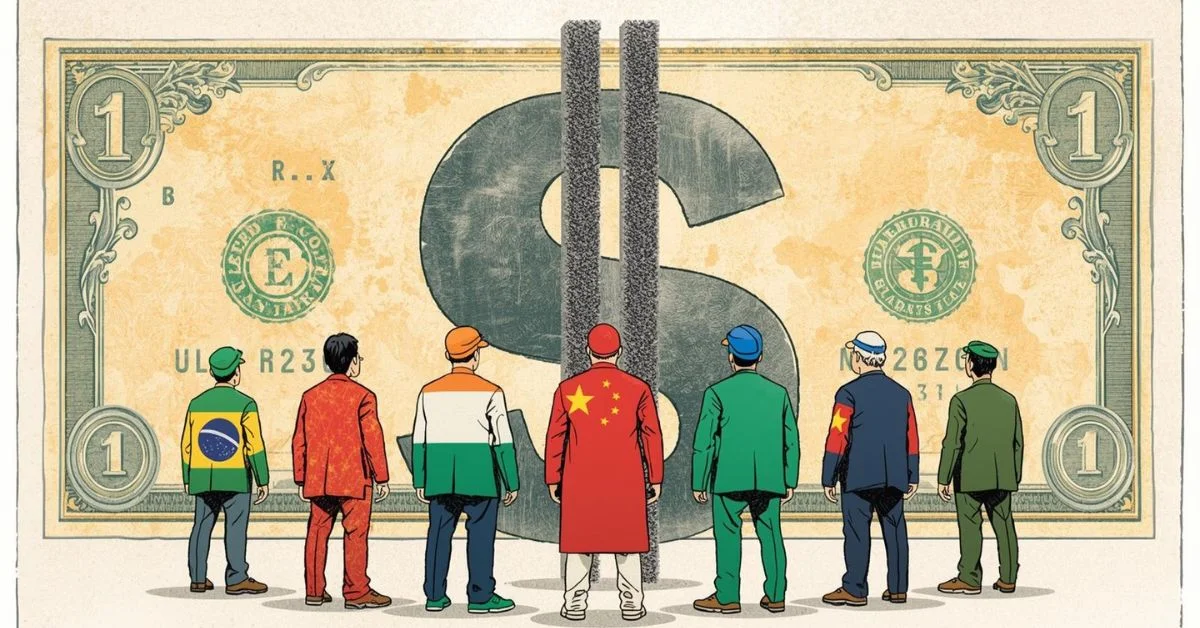
The headlines are dramatic: “BRICS Launches Gold-Backed Currency to Dethrone the Dollar!” For investors, such narratives spark equal parts fear and opportunity. The real question is this: Is the U.S. dollar’s reign as the world’s reserve currency truly under threat?
At Stoctok.com, we believe in separating facts from fiction so investors can build portfolios based on reality, not rumour. Let’s break down what BRICS is actually proposing, why the dollar’s dominance is harder to unseat than headlines suggest, and what this means for your financial strategy.
The Grand Ambition: What BRICS is Really Proposing
The BRICS bloc (Brazil, Russia, India, China, South Africa), now expanded to include Iran, Ethiopia, Egypt, and the UAE, represents nearly half of the world’s population and a major share of global GDP. Their ambition is simple: reduce reliance on the U.S. dollar in trade. But how realistic is this?
1. Local Currency Trade
- Instead of settling trade in USD, BRICS nations use local currencies like the Yuan (CNY) or Brazilian Real (BRL).
- This shift is already happening with China and Russia conduct most of their trade in Yuan and Rubles.
Reality Check: Incremental but real progress.
2. A BRICS Payments Systems
- There are proposals for a shared payment system that bypasses the U.S.-dominated SWIFT network.
- While feasible, it faces logistical hurdles and would take years to implement.
Reality Check: Long-term credible, but not immediate.
3. The Gold-Backed Currency Rumor
- The most hyped idea: a unified BRICS currency backed by gold reserves.
- Problems: Who controls it? How is it issued? Can vastly different economies share monetary policy?
- China, for instance, would never give up its monetary sovereignty.
Reality Check: More geopolitical theatre than near-term reality.
Why the Dollar’s Dominance Is Hard to Replace?
The U.S. dollar enjoys what economists call “exorbitant privilege.” Here’s why it won’t be dethroned overnight:
- Depth of U.S. Capital Markets: The Treasury market is the largest, most liquid safe-haven asset pool globally. In crises, everyone runs to dollars.
- The Petrodollar System: Oil is still overwhelmingly traded in dollars, ensuring structural demand.
- Network Effect: Most global contracts, invoices, and debt are USD-denominated. Switching is costly.
- Rule of Law & Stability: Investors trust U.S. institutions and property rights protections.
- Verdict: The dollar faces erosion, not collapse. The future is likely a multi-polar system with the Dollar, Euro, and Yuan sharing influence.
What This Means for Investors?
The dollar’s dominance won’t vanish tomorrow, but gradual de-dollarization will impact portfolios over the next decades. Here’s how you should respond:
For U.S. Investors
- Risk: Long-term erosion of purchasing power and potential inflation.
- Strategy: Diversify internationally.
Practical Steps:
- Increase exposure to non-U.S. stocks and bonds via ETFs like VXUS or IXUS.
- Remember: U.S. multinationals (Amazon, Tesla, Oracle) already hedge by earning in foreign currencies.
- Don’t panic but prepare for a gradual shift.
For Non-U.S. Investors
- Risk: Volatility from both local currency swings and dollar fluctuations.
- Strategy: Balanced global allocation with currency hedging.
Practical Steps:
- Hold diversified global ETFs.
- Use currency-hedged funds where appropriate.
- Keep some exposure to U.S. assets for stability.
Gold, Bitcoin, or Hype? Asset Deep Dive
When currencies face uncertainty, alternative assets attract attention. But not all hedges are created equal.
Gold: The Strategic Hedge
- Fact: Central banks (especially BRICS nations) are buying gold at record pace.
- Analysis: Gold benefits from de-dollarization, inflation, and global uncertainty.
- Verdict: Allocate 5–10% of your portfolio for long-term insurance.
Bitcoin: The Speculative Hedge
- Fact: Bitcoin is scarce and decentralized, touted as “digital gold.”
- Analysis: Correlates closely with risk assets (like tech stocks). Unlike gold, it often sells off in panics.
- Verdict: Treat as a 1–3% speculative position. High risk, potential high reward, but not a proven safe haven.
Key Takeaways for Your Portfolio
- Ignore the Hype: The dollar is not collapsing overnight.
- Recognize the Trend: De-dollarization is real but gradual.
Diversify Smartly:
- U.S. Investors → Increase global allocation.
- Non-U.S. Investors → Balance currency risks with hedged products.
- All Investors → Own some gold as a stabilizer.
- Bitcoin? Consider it a speculative bet, not a cornerstone asset.
FAQs:
Q1. Is BRICS launching a gold-backed currency soon?
Unlikely. It’s more political rhetoric than practical reality. Coordinating monetary policy across diverse economies is nearly impossible.
Q2. Will the dollar collapse?
No. The dollar may gradually lose share, but it remains the world’s dominant reserve currency for decades to come.
Q3. Should I invest in gold now?
Yes, as a hedge. A 5–10% allocation helps protect against systemic risks and long-term inflation.
Q4. Is Bitcoin a good hedge against the dollar?
It’s speculative. Keep exposure small (1–3%) if you believe in long-term adoption.
Q5. How can I protect my portfolio from currency risks?
Diversify globally, use currency-hedged funds, and maintain exposure to both U.S. and non-U.S. assets.
Conclusion:
The BRICS challenge to the U.S. dollar is more evolutionary than revolutionary. Investors shouldn’t fear headlines, they should build resilient, globally diversified portfolios that thrive in a multi-currency world.
At Stoctok.com, we provide the tools, calculators, and insights to help you stay prepared. Explore our Stock Profit Calculator, check our live stock and crypto feed, and sign up for our newsletter for weekly financial wisdom tailored to today’s investor.